2010/06/03

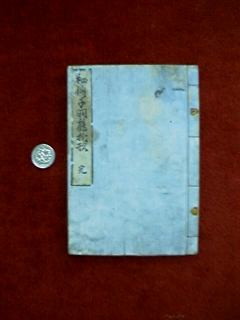
Hiden Senbazuru Orikata

The Hiden Senbazuru Orikata (The Secret of 1000 Cranes Paperfoldingis the first origami text in existence.


It was first published in 1797, and does not appear to have been republished since. It marks a turning point in origami tradition when the method for teaching shifted from exclusively direct instruction to text and diagram instruction. Now, people in one hemisphere teach people in the other hemisphere without ever meeting. There are untold hundreds (or thousands?) of origami books out there, everyone teaching everyone.


This particular book is not the most helpful. If you are a beginner, it lacks many diagrams, and all the models rely exclusively on cutting the paper.  Specifically, it shows various ways to precut sheets of paper in order to create connected cranes. 


I suggest checking out the full book. There is more to it than origami. It has a few pictures of people playing with cranes, both the animal and the folded paper. I find it very charming. But remember, Japanese is written from the opposite direction, so page 6 is left of page 5, for example.


I would love to be able to read the text, but I do not know how to read Japanese, yet. If anyone thinks they can translate, I would be interested.


[I should mention that the pictures were originally hosted by the Japan Origami Academic Society, but were taken down. The web archive still has the original page up. If it works for you, great, but if it does not, I took the liberty of putting them here.]

2010/06/02

The History of Origami

I am going to be teaching a little origami in an introductory course for some middle schoolers. I thought I should provide a handout with a summary of origami history for the students. This is my first draft:

In the year 105 AD, Cai Lun invented paper for the Han Dynasty in China. At that time, it was a very difficult to make paper and so it was only for the very rich. The Chinese may have folded paper shortly after inventing it, but it is not clear if they did. Eventually, monks brought the knowledge of how to make paper from China to Japan in the 6th century.


Nobody knows exactly when the Japanese began folding paper, but is it known that the first models were for ceremonial purposes. The noshi was given with gifts, especially among samurai, and were considered tokens of good luck. The mecho and ocho butterflies were used in traditional Shinto weddings, possibly as early as the Heian period (794–1185). Unfortunately, the models were not written down since they were taught from parents to children. Nor were they given a single name. Origami was also called Orikata, Orisui and Orimono.


Noshi

The first book on origami was published in 1797, called Hiden Senbazuru Orikata (The Secret of One Thousand Cranes Paperfolding) and it gave instructions on how to fold multiple cranes so that they are linked together. All the traditional folds were published in other books and origami became very popular in Japan.

The knowledge of paper making also spread west over the Silk Road through the Middle East. It reached Spain in 1036 with the Moor invasions and spread to the rest of Europe. At first, simple astrological diagrams (similar to fortune tellers) were folded in Spain. In the 16th century, napkin folding became popular among dinner tables for the nobility.

By the time Friedrich Fröbel lived (1782–1852), people all over Europe were folding. He was a teacher who also folded. He changed schools all over the world when he invented kindergarten. As the idea of kindergarten spread, so did origami, but it was still very simple. Miguel Unamuno (1864–1936) was an author and teacher who lived in Spain. He made many discoveries about new ways to fold and his ideas spread to the Spanish speaking countries of the world.

But it would be Japan that would finally make origami a worldwide art. Akira Yoshizawa (1911–2005), grew up folding. It is believed that he folded as many as 50,000 models throughout his life. He was different than other Japanese folders in that he insisted that origami was a creative artform, like painting or sculpting. In the 1950's he became a respected folder and published several books. He invented the standard instructions used by authors today. His work became very popular and he coordinated with many other folders in the United States.

After meeting Yoshizawa, Lillian Oppenheimer founded the Origami Center in New York in 1958 and folding groups started to appear all over the world. Some of the notable groups today include OrigamiUSA, the British Origami Society, Nippon Origami Association, Japanese Origami Art Society, and the Israeli Origami Center.


Further reading:
http://www.britishorigami.info/academic/lister/basichistory.php

[The image is from the
National Diet Library (Diet, as in legislative body)]

2010/05/27

Daily Crane Meditation

I decided a long time ago that I would meditate every day.

That plan failed.

Then I read a book by the Dalai Lama and one by a zen priest and listened to a meditation CD and tried to make it happen. But for some reason, I simply do not have the right frame of mind when I wake up in the morning to sit down, and just breathe for some number of minutes every day. I cannot focus. Eventually, I simply gave up.


But, as part of my 1000 cranes project, I decided that it would be a real boost if I committed to folding at least one crane a day. So then I combined that with my desire to meditate daily and formed my daily crane meditation. Now, by any objective standard, when I fold the crane in the morning I am not really meditating, but I do take the time to focus on my breathing. One benefit to the crane is that I am so familiar with the model that I do not need to think about how to fold it. I've gone beyond simple memorization of the crane to something intuitive, like how an athlete does not remember how to move, they just do. I just fold the crane without thought which frees my mind to focus on breathing.

These folding meditation sessions are probably much shorter than if I were to set aside a block of time to meditate the zen way, but they are infinitely longer than the non-sessions I had been doing. And, with a bit of luck, getting in the habit of doing the daily crane meditation every single day could pave the way for a larger commitment that is simply not an option right now.